A routine exam catches what owners overlook at home.
Dr. Karen Becker spent twenty-two years in small animal practice in suburban Illinois before moving to integrative veterinary medicine. She kept a running tally one year of the conditions she diagnosed most frequently. Six of them accounted for nearly 70% of her caseload.
"Owners come in thinking their dog has something rare," Becker said in a 2024 interview. "Nine out of ten times, it's one of the same six things I've seen three times already that week."
These are the conditions that fill veterinary offices across the United States. They share a pattern: they start slowly, the early signs look like nothing, and by the time an owner books the appointment, the disease has had months of runway.
1. Periodontal Disease
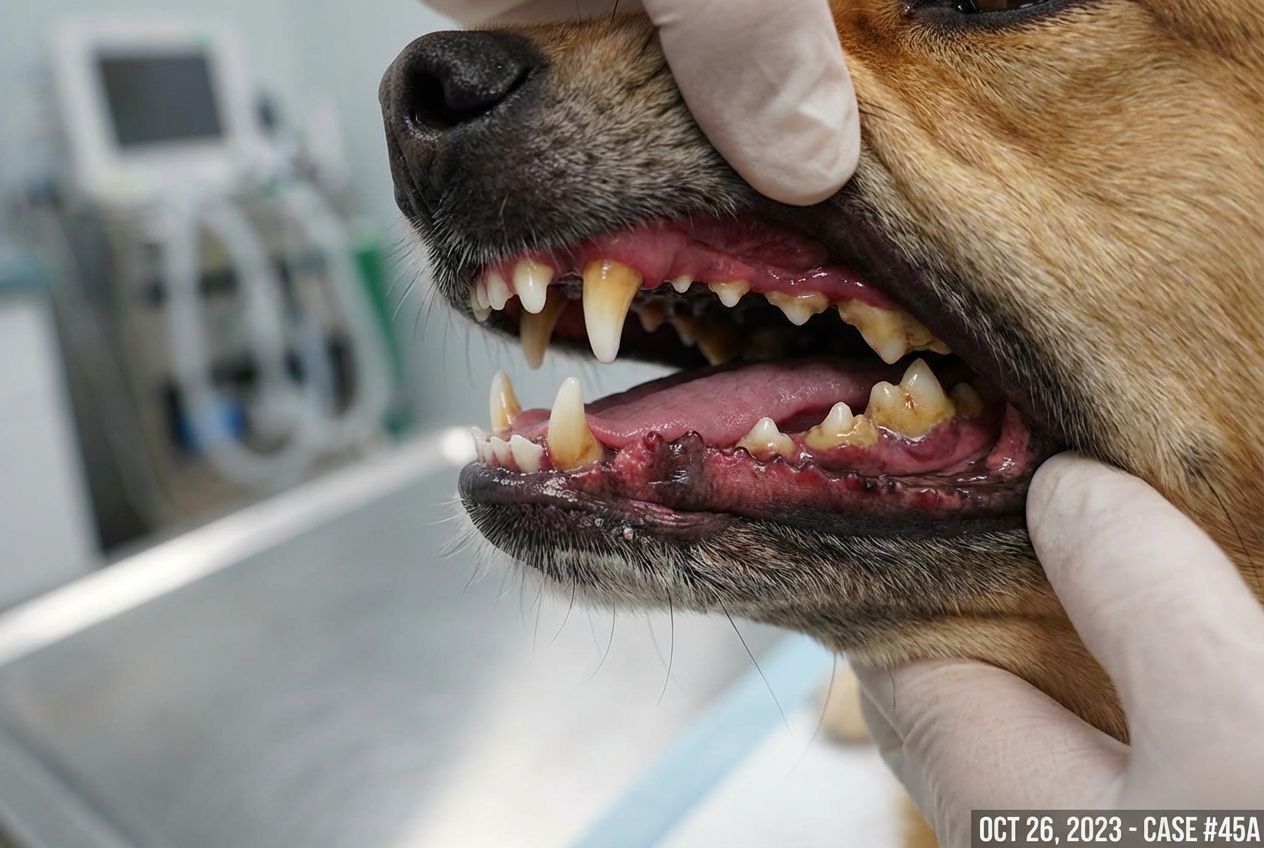
By age three, over 80% of dogs show signs of periodontal disease. It starts as gingivitis, a thin red line where the gum meets the tooth. Most owners never see it. The dog eats normally. Plays normally. The only early clue is breath that gets gradually worse, so gradually that the owner adjusts to it without realizing they have.
Left untreated, the bacteria travel below the gumline. Bone erodes. Teeth loosen. A 2019 study in the Journal of Veterinary Dentistry linked advanced periodontal disease to increased risk of heart, liver, and kidney damage in dogs. The bacteria enter the bloodstream through inflamed gum tissue and seed in organs.
"The mouth is the gateway. What happens in the mouth doesn't stay in the mouth. It goes everywhere the blood goes."
Dr. Brook Niemiec, veterinary dental specialistProfessional dental cleaning under anesthesia runs $800 to $3,000+ depending on extractions. For senior dogs with heart conditions, anesthesia itself carries risk. Prevention, the kind that happens at home between vet visits, is the gap where most owners have nothing. A new approach to at-home dental care is changing that →
2. Osteoarthritis
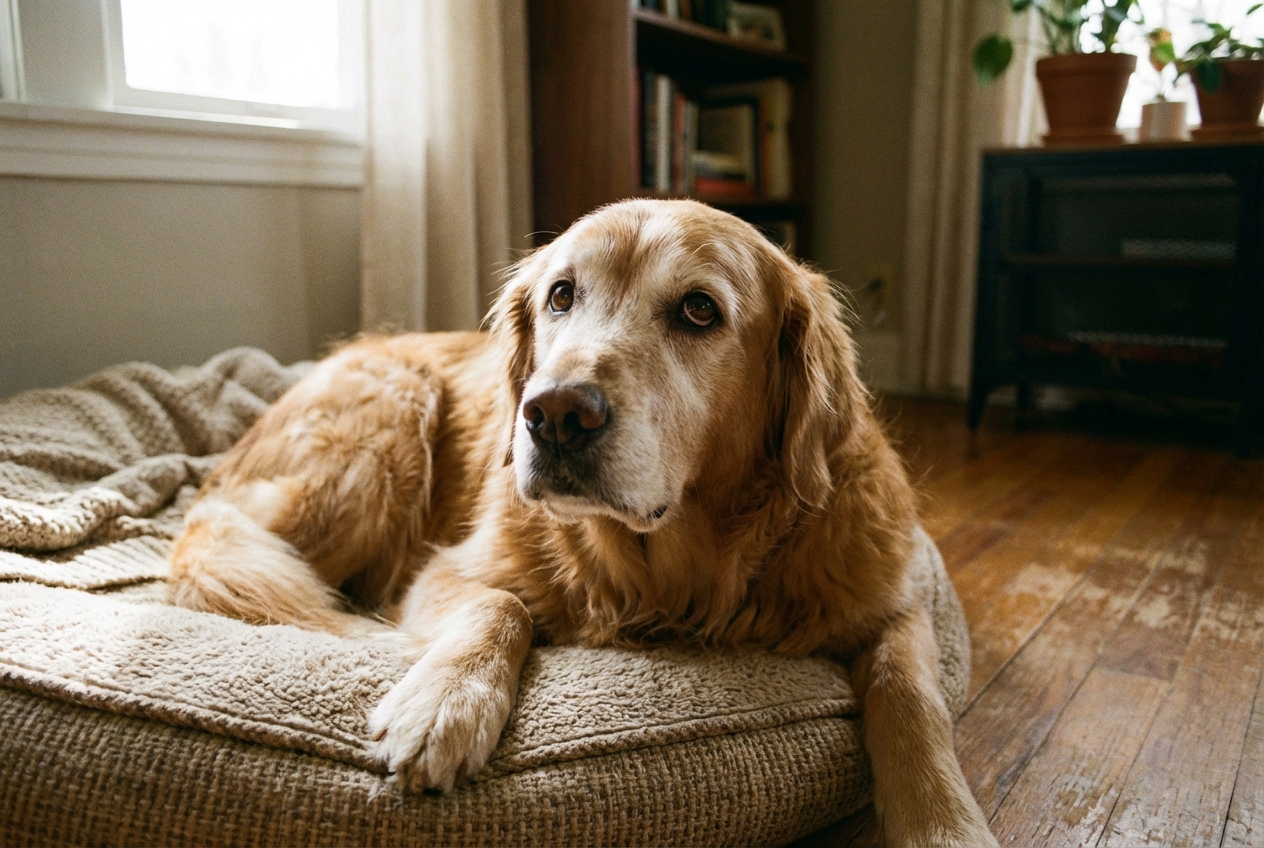
Arthritis affects roughly 25% of all dogs. In dogs over eight, that number climbs past 60%. The early signs are subtle: a dog that used to jump on the couch now hesitates. A dog that used to sprint at the park now trots. Owners assume it's aging. Often it's joint cartilage breaking down faster than the body can repair it.
Dr. James Cook, an orthopedic veterinary surgeon at the University of Missouri, has called osteoarthritis "the disease of slow adaptation." The dog adapts to the pain. The owner adapts to the dog's new behavior. By the time someone notices, the cartilage damage is irreversible.
Weight management is the single most effective intervention. A 14-year Purina lifespan study found that dogs kept at lean body condition lived 1.8 years longer and showed arthritis signs 3 years later than their overfed littermates. Supplements like glucosamine and omega-3 fatty acids show moderate evidence. Prescription pain management (NSAIDs, gabapentin) manages symptoms but doesn't restore cartilage.
3. Ear Infections (Otitis Externa)
Ear infections account for one of the most common reasons dogs visit the vet. Breeds with floppy ears (Cocker Spaniels, Basset Hounds, Labrador Retrievers) are predisposed, but any dog can develop them. The trigger is usually moisture, allergies, or both.
The signs: head shaking, scratching at the ears, a yeasty or sour smell, dark discharge. Dr. Elizabeth Falk, a dermatologist at the Animal Dermatology Clinic in San Diego, noted that most chronic ear infections she treats are secondary to food allergies that were never identified. "We treat the ear. The ear clears up. Three weeks later it's back. Because nobody addressed the underlying allergy."
A single vet visit for an ear infection typically costs $150 to $300. Dogs with recurring infections can rack up $1,000+ per year in treatment before anyone investigates the root cause.
4. Skin Allergies (Atopic Dermatitis)
Dogs don't sneeze from allergies the way humans do. They itch. Belly scratching, paw licking, face rubbing against furniture. About 10 to 15% of dogs suffer from atopic dermatitis, an allergic reaction to environmental triggers like pollen, dust mites, or mold. Food allergies account for another subset, and the two frequently overlap.
The typical cycle: the dog itches, the owner tries an oatmeal shampoo, the itching continues, the dog develops a secondary skin infection from the scratching, and only then does the owner visit the vet. By that point, the dog may need antibiotics, antifungals, and a prescription allergy medication like Apoquel or Cytopoint.
Dr. Douglas DeBoer at the University of Wisconsin-Madison School of Veterinary Medicine has studied canine allergies for three decades. His research indicates that allergy testing and immunotherapy (allergy shots) provide long-term improvement in 60 to 70% of atopic dogs, but most owners never pursue testing because the initial workup costs $400 to $800.
5. Obesity
The Association for Pet Obesity Prevention's 2023 survey found 59% of dogs in the United States are overweight or obese. Vets diagnose it constantly. Owners rarely bring it up themselves.
"Nobody walks in and says 'my dog is fat,'" said Dr. Ernie Ward, the veterinarian who founded the obesity prevention organization. "They say 'he's a little chunky' or 'she's big-boned.' I've had clients argue with me while their dog is panting from the effort of walking into the exam room."
The consequences stack: arthritis accelerates, diabetes risk increases, respiratory function decreases, lifespan shortens by up to 2.5 years. The fix is straightforward (fewer calories, more movement) but execution is where owners struggle. Treats account for 20 to 30% of caloric intake in the average pet household, and cutting treats feels like taking away love.
6. Gastrointestinal Issues
Vomiting and diarrhea are the bread and butter of veterinary emergency rooms. Most episodes are self-limiting, caused by dietary indiscretion (the veterinary term for "your dog ate something they shouldn't have"). But chronic GI issues, the kind that persist for weeks, often point to something deeper: inflammatory bowel disease, pancreatitis, food intolerances, or intestinal parasites.
Dr. Stanley Marks, an internal medicine specialist at UC Davis, estimated that 10 to 15% of referral cases he sees involve chronic GI disease that went undiagnosed for months because the owner assumed occasional vomiting was normal. "Dogs vomit. That's what people tell themselves. And they're right, dogs do vomit sometimes. But once a week is not sometimes. That's a pattern."
Diagnostic workups for chronic GI disease can run $1,500 to $4,000+ including bloodwork, ultrasound, and endoscopy. Early intervention, starting with a vet visit at the first sign of a persistent pattern rather than waiting months, typically costs a fraction of that.
Dental disease is #1 on the list. Where does your dog stand?
A free 60-second assessment checks your dog's age, breed, and symptoms against known risk factors.
Take the Free Dental AssessmentThe Pattern Across All Six
Every disease on this list shares the same progression: silent onset, slow escalation, late detection. By the time an owner notices something is wrong, the condition has been developing for weeks or months.
Annual wellness exams catch some of it. But the interval between exams is where most damage accumulates. Owners who know the early signs, the specific behavioral shifts that precede a diagnosis, have a significant advantage. A dog that hesitates before jumping isn't "getting old." A dog whose breath gradually worsens isn't "just being a dog." These are early signals, and recognizing them buys time.
Periodontal disease sits at the top because it affects the most dogs, starts the earliest, and connects to the most downstream problems. It's also the one condition where daily at-home prevention exists and works, if the method fits the dog and the owner's reality.
The rest of the list responds best to early detection and proactive management, not panic-driven emergency visits. Build the habit of watching for the quiet changes. They're never as quiet as they look.