Linda Marsh, 58, hadn't mentioned Daisy's teeth to anyone. Not to her sister. Not to her neighbor who also has a Yorkie. Not even to her vet — because she already knew what the vet would say.
"I could smell it every morning when I set her bowl down," Marsh said from her kitchen in suburban Ohio. "I'd turn my head — just a reflex — and then feel guilty about it. She's ten. She's my girl. And I couldn't even breathe near her without flinching."
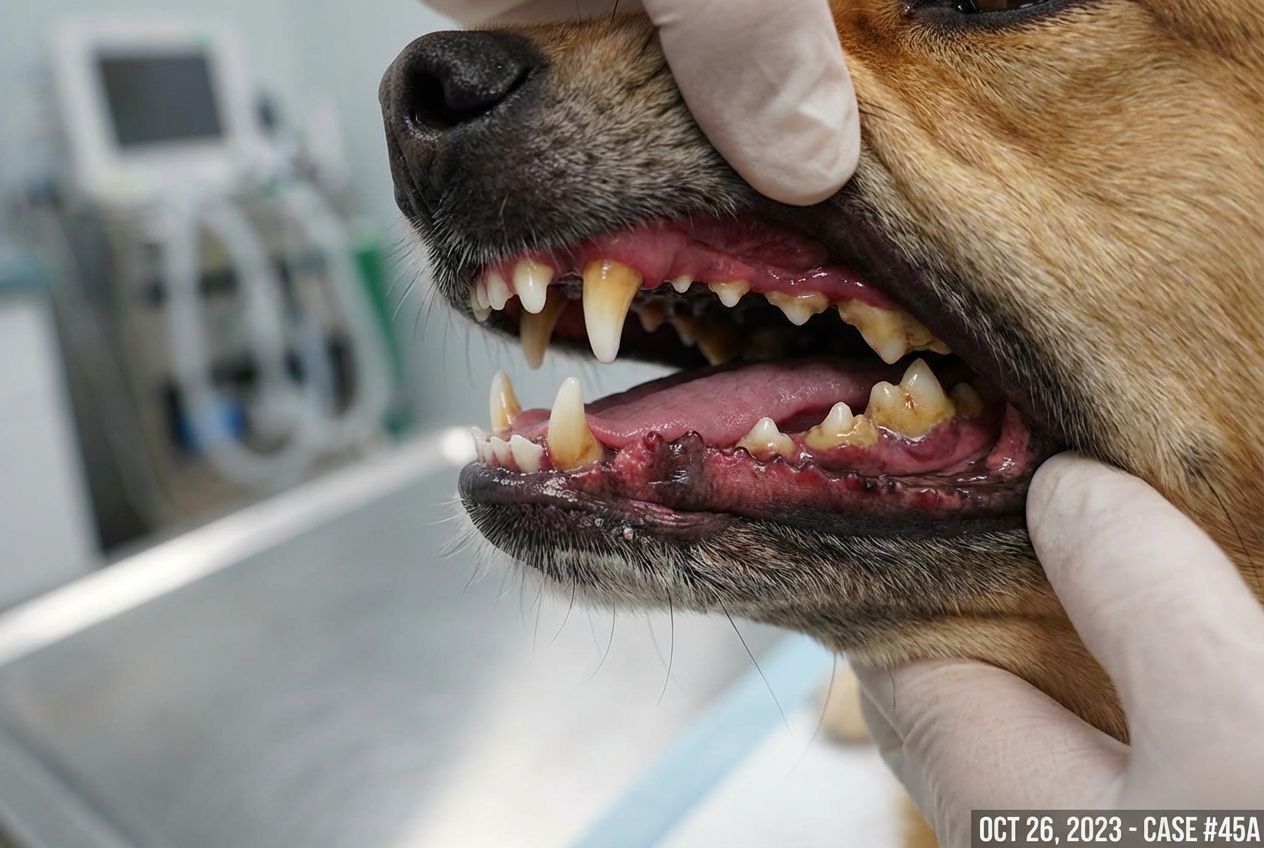
That guilt had been building for two years. Yellow-brown lines along Daisy's gumline. Breath that could clear a room. A vet estimate for dental cleaning under anesthesia that made Marsh's stomach drop: $1,400. For a dog with a heart murmur.
Marsh is not unusual. According to veterinary surveys, she's one of the 95%.
"Like 95% of pet owners, I don't regularly brush my dog's teeth — even though I know it's the best thing for his health."
— Veterinary professional, Vetstreet surveyAmong her colleagues, it was unremarkable. Among the thousands of dog owners who read it, it landed like a brick. If a trained veterinarian can't keep up with brushing her own dog, maybe the problem was never the owners. See your dog's dental risk score →
Everything Linda Tried Before Giving Up
Over three years, Marsh tried four different approaches. None of them worked.
First came the finger brush. Daisy bit it on day one. Then the enzymatic toothpaste that was supposed to "do the work without brushing." The tartar didn't budge. Then dental chews — $28 a bag, every month for over a year. "My vet told me later they're basically expensive treats," Marsh said. "They don't reach below the gumline where the bacteria actually lives."
Finally, the cleaning. $1,200 at a veterinary dental specialist. Daisy went under general anesthesia, came home groggy, refused food for two days. "I thought that was it. I thought we fixed it," Marsh recalled. Six months later, the tartar was back. The breath was back. The estimate for the next cleaning: $1,400, because now there might be extractions.
"That's when I gave up," she said. "I just told myself, this is what happens to small dogs when they get old. There's nothing I can do.318 readers highlighted this"

Two Options, Both Designed to Fail
What Marsh didn't realize was that she'd been caught in a false binary — the assumption that dog owners have exactly two choices for dental care, and only two:
Option A: Brush your dog's teeth every day.
Option B: Pay for professional cleaning under general anesthesia.
The first option fails 92% of dog owners. Not because they're lazy — because their dogs physically won't allow it. They clamp their jaws. They thrash. They bite the brush. Even among the 8% who manage it, a quarter say it's the worst part of having a dog.
"I tell my clients to brush every day. I can barely manage it with my own dog. The advice is technically correct and practically useless for most families."
— Practicing veterinarian, professional forumThe second option fails differently. You sit in the vet's waiting room filling out a consent form that mentions cardiac arrest. You hand over your credit card. You drive home without your dog and spend the afternoon checking your phone. She comes back groggy, won't eat for two days. And within 24–48 hours, the tartar starts rebuilding. The procedure isn't a fix. It's a reset button on a twelve-month clock.
| Procedure | Your Area |
|---|---|
| Basic dental cleaning | $800 – $1,500 |
| Cleaning with extractions | $1,500 – $3,000+ |
| Recommended frequency | Every 12 months |
And for senior dogs like Daisy — dogs with heart murmurs, kidney concerns, or simply the fragility that comes with age — general anesthesia isn't just expensive. It's terrifying. "The vet told me the risk was 'small but real,'" Marsh said. "When it's your dog on the table, 'small but real' doesn't feel small."
"It Was Never Your Fault"
The system gave dog owners two options, and both were designed to fail most real families. Not because vets are dishonest — but because for decades, there was no viable third option to recommend.
"When I read that vet's post, I cried," Marsh said. "Not because it was sad. Because for three years I thought I was a bad dog mom482 readers highlighted this. And it turns out even the vet can't do what they tell us to do."
A Third Option That Wasn't Supposed to Exist
Marsh found it in a Facebook breed group for Yorkie owners, buried in a comment thread about dental cleanings. A woman named Carol had posted a photo of her 12-year-old Maltese — visibly less tartar along the gumline after eight weeks — with a caption that read: "I stopped fighting and started letting her lick."
Dogs lick. It's their most natural, most cooperative behavior. They lick hands, faces, bowls. They do it willingly, without resistance. No one has to hold them down.
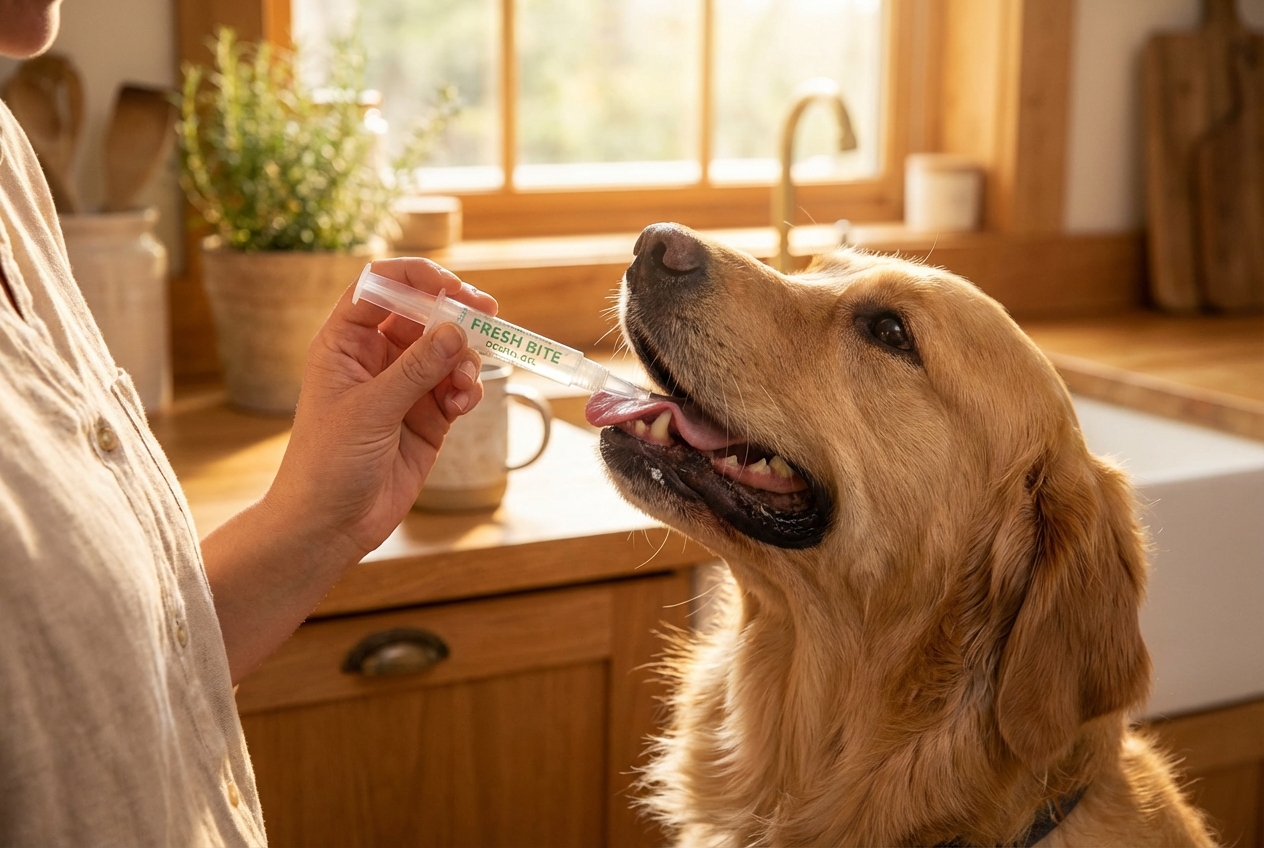
A new category of dental care had emerged around this observation: a veterinary-grade gel delivered through a stick format that dogs voluntarily engage with. No wrestling. No clamped jaws. No anesthesia. The dog licks the stick, and the active ingredients — including chlorhexidine, the same antimicrobial used in veterinary clinics — go to work on the bacterial biofilm that causes tartar, plaque, and the breath that makes owners turn their heads.

"Daisy licked it on day one," Marsh said. "Thirty seconds. She treated it like a treat. I stood there thinking, that's it? Three years of guilt, and this was the whole routine?"
"I Wish Someone Had Told Me About This Three Years Ago"
"My Cavalier is 8 and her vet wanted $1,800 for a cleaning. I started using the stick instead. At her next checkup, the vet said her teeth looked 'noticeably better.' I almost fell out of the chair."
— Janet K., verified purchaserBarbara J., whose 12-year-old Pomeranian's vet had ruled out anesthesia entirely, described the product as "the first time I've felt like there's actually something I can do that doesn't terrify me."
Teresa G. had spent years buying dental chews under the impression they were helping. "My vet finally told me they don't really address below-the-gumline bacteria," she said. "This was the first product that actually targeted what the chews miss."
Carol A., who has two Maltese and had spent nearly $7,000 on dental cleanings over five years, put it bluntly: "I did the math. Two dogs, one cleaning each per year, tartar back every time. At less than a dollar a day for both of them, I'm saving thousands and their teeth actually look better between vet visits."
The three things owners mention most: breath improvement within the first two weeks, a daily routine that takes under a minute, and the relief of finally doing something instead of nothing.
"Every time Daisy licks the stick, I feel like I'm being the pet parent I always wanted to be," Marsh said. "That sounds dramatic, but when you've spent three years feeling guilty, it's not dramatic. It's everything."
The product is not a replacement for professional veterinary care. It is not a miracle. It's a daily habit that fills the gap between cleanings — the gap where 95% of dog owners have been stuck with nothing.
For owners like Marsh, that gap was three years of guilt. For Daisy, it was 30 seconds of licking.
Every dog's dental situation is different. A free 60-second assessment takes into account your dog's age, size, and symptoms to generate a personalized risk score.
Take the Free 60-Second Dental Risk Assessment