The window for easy socialization is short and can't be reopened once it closes.
John Paul Scott and John L. Fuller spent 13 years at the Jackson Laboratory in Bar Harbor, Maine, studying dog development. Their 1965 book, Genetics and the Social Behavior of the Dog, identified something that changed how veterinarians and behaviorists think about canine development: there is a discrete, time-limited period during which puppies are neurologically primed to learn that things are safe.
They called it the sensitive period for socialization. It begins around 3 weeks, when the puppy's sensory systems come online, and closes around 12 to 14 weeks, when fear responses mature and the nervous system becomes significantly less plastic. What a puppy encounters during this window, what it experiences as normal, shapes its behavioral baseline for the rest of its life.
This isn't a metaphor. It's neuroscience. The neural pathways laid down during socialization are different from those established by exposure later in life. Early exposure requires much less effort and produces much more durable results than remedial work done with an adult dog.
What the Window Actually Looks Like
At 3 weeks, puppies begin exploring. They can smell, hear, and see. Positive exposure to handling, novel objects, sounds, and surfaces begins to register meaningfully. Between 3 and 5 weeks, the primary socialization is to other dogs and the mother. Between 5 and 12 weeks, the window shifts to include humans and other species.
The fear response matures progressively across this period. A five-week-old puppy approaches a vacuum cleaner with curiosity. A twelve-week-old may startle. A sixteen-week-old may back away and need repeated exposure before being comfortable. A twelve-month-old dog that was never exposed to vacuum cleaners as a puppy may need months of systematic desensitization to become comfortable.
Dr. Ian Dunbar, who pioneered puppy socialization classes in the 1980s, observed that most owners receive their puppies at 8 weeks of age with 6 weeks of socialization window remaining, and then spend those 6 weeks at home, waiting until vaccinations are complete before allowing the puppy to encounter the world. This is, from a developmental standpoint, a significant loss.
"The number one cause of death in dogs under three years is behavior problems, not disease. Most of those problems trace directly back to what happened, or didn't happen, in the first 14 weeks."
Dr. Ian Dunbar, veterinarian and animal behavioristThe Vaccine Timing Conflict
The tension between socialization and vaccination is real and has been explicitly addressed by the American Veterinary Society of Animal Behavior (AVSAB). Their 2008 position statement states: "Behavioral problems are the greatest threat to the owner-dog bond. In general, the benefits of early socialization outweigh the risks of disease exposure in environments that are not high-risk."
The AVSAB recommends that puppies begin socialization classes as early as 7 to 8 weeks, one week after their first vaccination, provided the environment is clean and other puppies are also vaccinated. This is not a fringe position. It reflects a risk-benefit analysis that most veterinary behaviorists now share.
The risk of a puppy contracting parvovirus at a well-run puppy class is low. The risk of a puppy becoming fearful, reactive, or aggressive because it was isolated during its critical period is high. Vets who recommend keeping puppies home until the full vaccine series is complete at 16 weeks are making a recommendation that has an unacknowledged behavioral cost.
What Counts as Socialization
Socialization is not exposure. This distinction matters. A puppy that is dragged into a loud, crowded environment and overwhelmed is not socialized. It's traumatized. Negative experiences during the sensitive period stick as firmly as positive ones. A puppy that has a frightening experience with children at 9 weeks may be fearful of children at 9 months, despite never having another negative experience with a child.
Effective socialization means the puppy encounters something new and the experience is positive or neutral. The puppy is curious, not frozen. The puppy engages, moves toward, sniffs. If the puppy shows fear signals, whale eye, tucked tail, flattened ears, retreating, the exposure has gone too far. Step back. Let the puppy choose the distance.
The checklist for socialization should be broad. Different types of people: men, women, children, people with hats, people with beards, people with umbrellas, people in uniforms. Different surfaces: carpet, tile, grass, gravel, metal grating, wood stairs. Different sounds: traffic, thunder recordings, power tools, crying babies, other animals. Different handling: ears, paws, mouth, belly, tail.
The Common Mistakes
Mistake one: waiting until the vaccine series is complete. By week 16, 2 to 4 weeks of the sensitive period have passed. The window was open and unused.
Mistake two: doing all socialization at home. Carrying a puppy through the neighborhood does not substitute for letting a puppy walk on unfamiliar surfaces and approach unfamiliar things. Passive exposure has some value. Active, choice-based engagement has more.
Mistake three: quantity without quality. Hauling a puppy to five events in one day and calling it socialization produces an exhausted, potentially overwhelmed puppy. Three or four calm, positive exposures to new things per day, for 10 minutes each, beats a single marathon session.
Mistake four: focusing only on dogs and people. The socialization window should cover environments, sounds, surfaces, objects, handling, and routine experiences like car rides, crates, and veterinary handling. A puppy that was never comfortable being examined will become an adult dog that finds vet visits genuinely frightening. The cumulative effect of repeated fear at the vet has downstream consequences for health care compliance.
Is your dog's behavior affecting its overall wellbeing?
A free 60-second quiz helps identify whether health or behavioral factors may be contributing to your dog's quality of life.
Take the QuizPuppy Classes: What to Look For
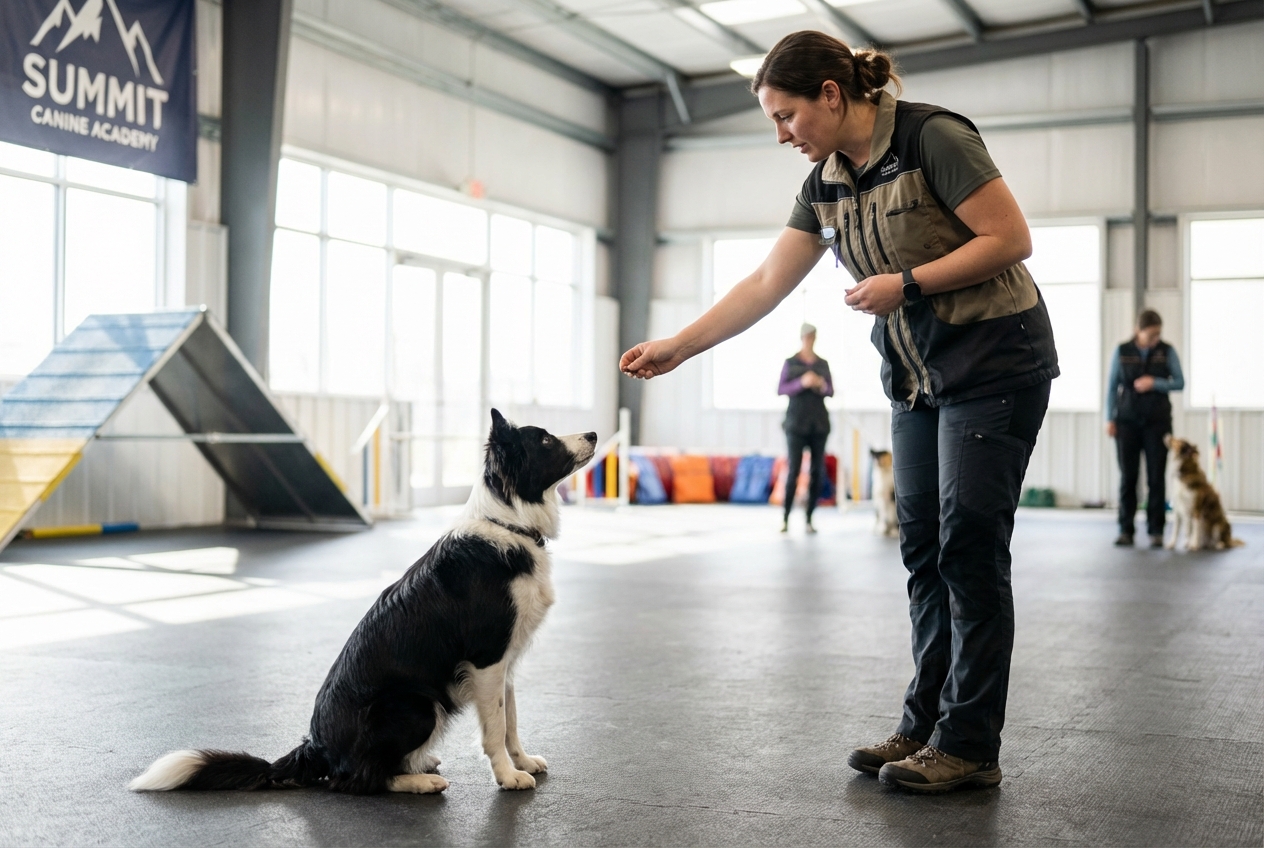
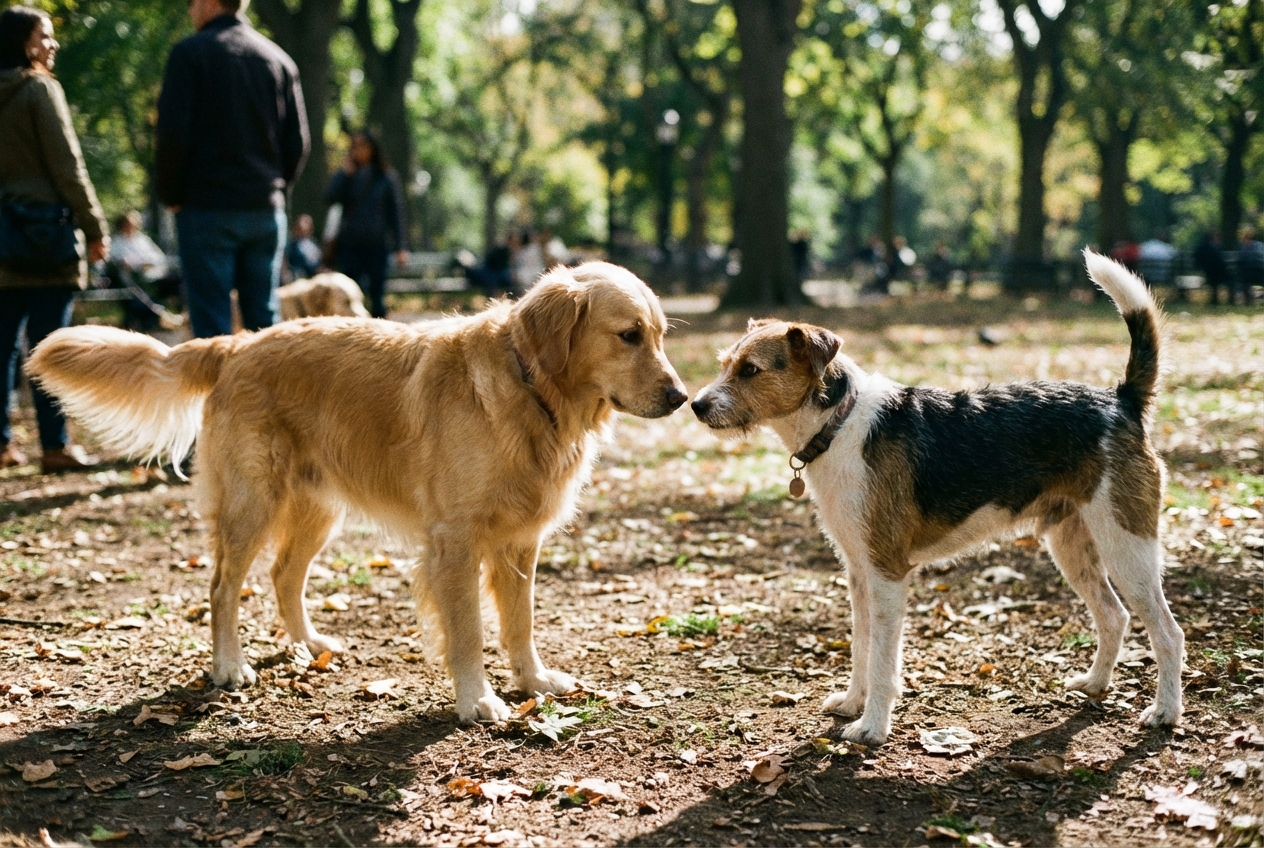
A well-run puppy class does several things at once. It socializes puppies to other puppies in a controlled environment. It teaches basic manners using positive reinforcement. It socializes owners to the language of dog behavior. And it creates a setting where puppies encounter novelty with a trainer present who can manage the experience and ensure it stays positive.
Look for classes that require proof of at least one vaccination before attending. Look for a trainer with credentials from the CCPDT (Certification Council for Professional Dog Trainers) or equivalent. Watch one class before enrolling. A good class has puppies that look engaged but not frantic, off-leash play that is monitored and interrupted before it escalates, and a trainer who is watching individual dogs, not managing the group as a whole.
Avoid trainers who use punishment, prong collars, or physical corrections on puppies. There is no evidence base for aversive techniques in socialization, and there is meaningful evidence that they can sensitize fearful responses during the sensitive period.
If the Window Has Already Closed
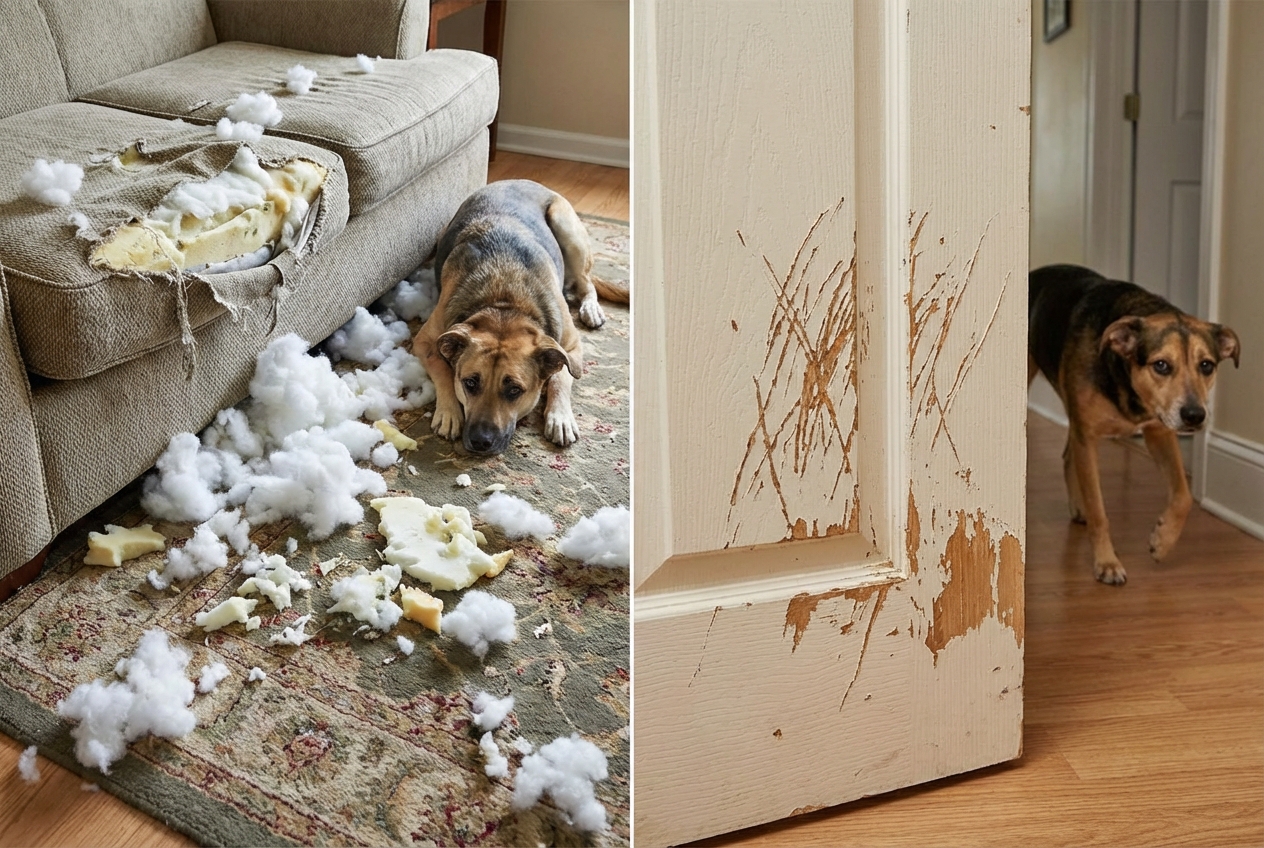
For owners who adopted an adult dog, or who did not know about the socialization window when their current dog was a puppy, the news is not hopeless but is realistic. Adult dogs can be counter-conditioned to stimuli that frighten them. The process takes longer, requires more repetitions, and the results are generally less complete than what's achievable during the sensitive period.
The approach for under-socialized adult dogs is systematic desensitization: graduated, sub-threshold exposure to the frightening thing, paired with highly positive outcomes. The same principles that apply to separation anxiety treatment apply here. The dog learns that the formerly scary thing predicts good things. Over time, the fear response diminishes.
What a missed socialization window cannot easily fix: a dog that was abused or traumatized during the sensitive period, rather than simply under-exposed, may carry fear responses that are deeply encoded and resistant to modification. These dogs benefit from professional assessment and often from understanding their communication signals carefully before any remedial work begins.
The point of the socialization window is not to make owners of adult dogs feel guilty. It's to make every owner of a puppy understand what they're holding: a brain that is, for a few weeks, extraordinarily open. That window doesn't announce itself, and it doesn't come back. The owners who use it well are setting their dog up for a life that requires substantially less behavioral remediation down the road.